Dead Sea Mud: The Complete Guide to Replacing Clay
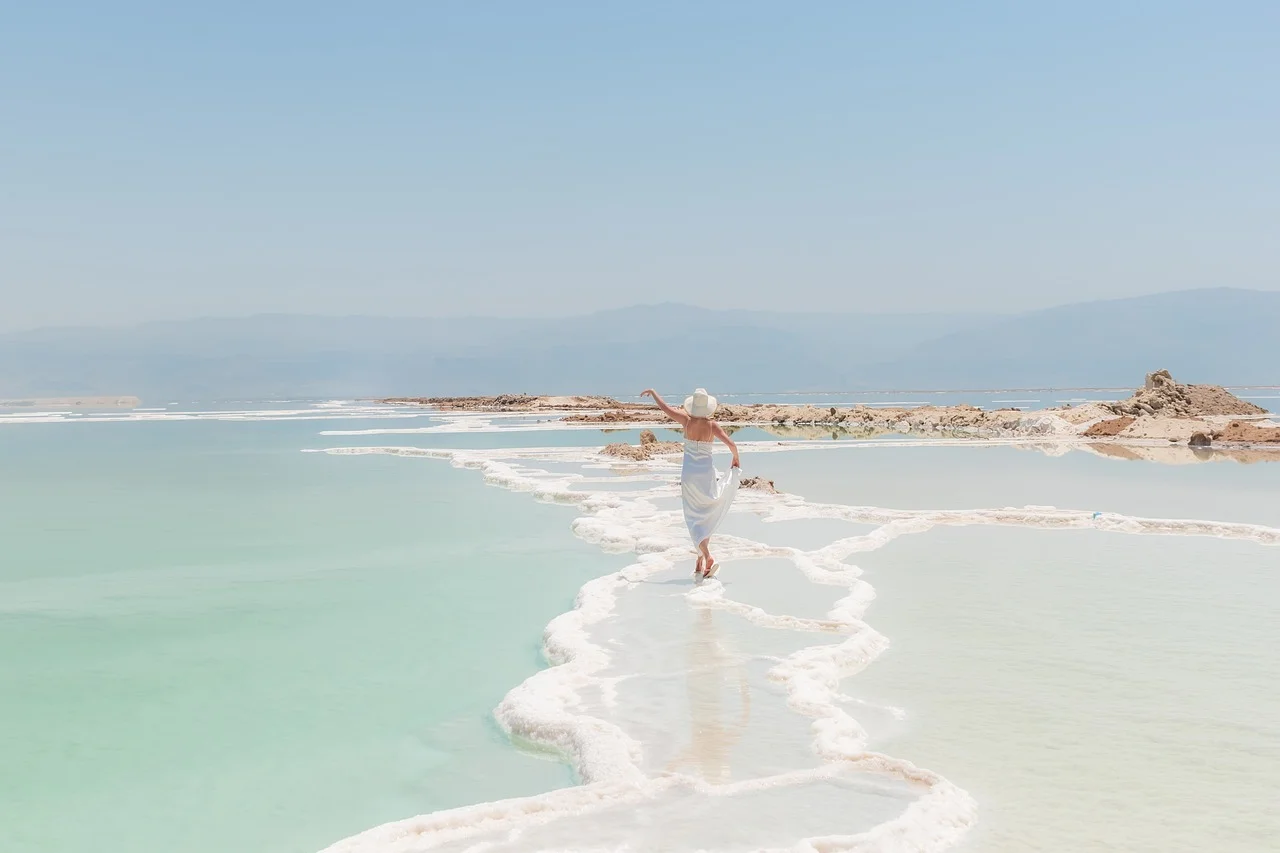
The world of purifying skincare is often clouded by a persistent misconception, leading many consumers to lump all dark pastes together under the generic term "clay." However, authentic Dead Sea mud belongs to an entirely different geological and cosmetic category. According to manufacturers like Dead Sea Treasures, this material is not a traditional clay, but rather a natural sediment sourced from the lowest point on Earth, sitting roughly 430 meters below sea level (an elevation that continues to drop). This distinction lies at the heart of an ongoing debate in Western European beauty routines: should we stick to classic, drying powders, or make the switch to this marine sediment?
Key takeaways:
- Dead Sea mud is a marine sediment, unlike kaolin and bentonite, which are clays of terrestrial or volcanic origin.
- According to manufacturers, this sediment interacts with the skin without causing the intense dryness often associated with traditional masks—a claim to be viewed as brand messaging rather than established clinical data.
- Fresh, jarred formats retain the original mineral balance, while powders offer a longer shelf life.
Dead Sea mud or clay: what is the difference?
The first step in rethinking your skincare routine is correctly identifying the raw materials you apply to your face. Traditional purifying masks, widely available on the market, rely on terrestrial or volcanic bases. According to manufacturer labels, these clay masks typically contain kaolin or bentonite.
Kaolin is a very mild white clay, used in cosmetics for centuries due to its softening properties and its ability to absorb excess sebum with only a mild drying effect. Conversely, bentonite is a smectite-rich clay rock, often formed from the weathering of volcanic ash, known for its ability to swell upon contact with water.
Contrasting geological origins
Compared to these earth-extracted clays, this Middle Eastern sediment offers an entirely distinct profile. Dead Sea mud is a dark paste that has formed over thousands of years at the bottom of this hypersaline body of water. This slow accumulation process gives it one of the highest mineral concentrations in the world.
As manufacturer Juman points out, this specific mud is harvested directly from the shores of the Dead Sea, an area bordered by Jordan, Israel, and Palestine. It is this extreme environment that saturates the paste with minerals like magnesium, calcium, and potassium.
Here is an overview of the fundamental differences between these three skincare staples:
| Raw Material | Geological Origin | Drying Effect | Ideal Skin Profile |
|---|---|---|---|
| Dead Sea Mud | Deep marine sediment | Relative moisture retention (according to manufacturers) | Combination to oily skin |
| Kaolin | Residual clay rock | Mild drying | Normal to combination skin |
| Bentonite | Volcanic ash | Intense absorbent effect | Very oily skin (targeted) |
Analyzing this table reveals that the generic term "mask" covers vastly different physicochemical behaviors. Therefore, your choice of ingredient should align with your epidermis's tolerance for water loss.
How does mineral mud interact with the skin?
The difference in geological origin translates into very distinct mechanical effects once the product is applied to the face. This is where combination skin types often suffer the consequences of a poor choice, caught between the need to mattify the T-zone and the necessity of preserving moisture in the cheeks.
The phenomenon of moisture extraction
The behavior of a paste made from volcanic ash or white earth is mechanically extractive. As a clay paste dries on the face, it actively draws moisture from the skin's surface. This rapid process explains the tight, tingling sensation that many users experience. While this phenomenon guarantees an immediate matte finish, it puts significant stress on the hydrolipidic barrier (the skin's natural protective film).
It's a common paradox: combination skin, when stripped of its water, may react by producing more sebum to compensate for the sudden dryness. Bentonite acts like a sponge, pulling water from the stratum corneum. In contrast, manufacturers claim that a marine sediment interacts with the epidermis without triggering this defense mechanism—an assertion promoted by brands rather than established by published independent studies.
A gentler approach to purification
This respect for skin physiology is one of the main selling points highlighted by producers. According to manufacturers, mineral mud regulates sebum without drying out the skin, contrasting sharply with conventional clay masks. This lack of mechanical tension during the application time makes it, in their view, an ideal solution for combination skin, which requires a tailored approach for different areas of the face.
However, its purifying power is not diminished. According to manufacturers, Dead Sea mud deeply cleanses pores by removing excess sebum and impurities built up on the skin's surface. This deep cleanse, paired with the promised preservation of cellular moisture, makes the material particularly well-suited—according to brands—for acne-prone or oily skin that needs to be clarified without being stripped raw.
Fresh (jarred) or dried (powdered): which format should you choose?
Historically, the cosmetic industry has favored dehydrated formats for logistical reasons. Terrestrial clays are first extracted from the earth, then purified and meticulously ground into a fine powder. It is mostly in this dry, inert form that they are sold, waiting to be mixed with water by the consumer.
The availability of sedimentary powders
This packaging method is no longer exclusive to clays. Dead Sea mud is also sold in powder form across Western European markets. For instance, this type of product can be found through certain online retailers under brands like Najel, giving consumers access to a dehydrated option.
The texture trade-off
Opting for a DIY rehydrating powder offers a distinct advantage when it comes to long-term storage, as the absence of water limits bacterial growth. This format also empowers users to create custom blends, substituting standard tap water with floral hydrosols or herbal decoctions.
However, the "ready-to-use" jarred format preserves the mineral mud in its fresh state. The water naturally present in this dark paste already holds its mineral ions in solution. Rehydrating a powder with regular tap water doesn't always manage to perfectly recreate the silky smooth texture of the raw sedimentary matrix.
Application protocol: How should you use Dead Sea mud?
The effectiveness of a mineral treatment depends not just on its composition, but on the rigor of its application. Using a highly concentrated sediment requires following a precise method to maximize its benefits while protecting the skin's ecosystem.
Key application steps
Incorporating this ritual requires just a few minutes of care. According to standard recommendations, the application protocol for a Dead Sea mud mask involves the following specific steps:
- Always start with a clean, thoroughly dry face.
- Apply an even layer of the product over the entire treatment area, strictly avoiding the delicate and thin eye contour.
- Leave the mask on for 10 to 15 minutes.
- Rinse thoroughly with lukewarm water, being careful not to rub harshly.
- Immediately apply a moisturizer to seal in the treatment.
Frequency guidelines and precautions
The desire for that squeaky-clean feeling shouldn't lead to over-stressing the epidermis. For a Dead Sea mud mask, it is recommended to limit use to 1 to 2 times a week. Avoiding overuse is crucial, especially for naturally dry or sensitive skin types.
Certain dermatological conditions call for extra caution. If you have eczema, rosacea, or known allergies, you should consult a dermatologist before incorporating this type of mask into your routine.
Integrating it into your overall routine
For beginners, it's highly recommended to start with a small jar for your first use, allowing you to perform a patch test to monitor your skin's reaction. Post-mask care is just as critical as the application time. Once the mask is removed, applying a suitable moisturizer is essential. To complement this hydration, regular facial exfoliation can help maintain your results.
Conclusion
The evolution of beauty rituals reveals a growing interest in better understanding epidermal physiology. The old approach of stripping the face to achieve a squeaky-clean feel is gradually giving way to routines aimed at preserving the skin's natural balance. Choosing to incorporate a marine sediment rather than a highly absorbent volcanic powder aligns perfectly with this desire to treat the skin with a gentler touch. While bentonite and kaolin still hold specific uses depending on skin type, manufacturers present Dead Sea mud as a compelling option to purify the face without compromising hydration—a promise well worth evaluating against your own skin's tolerance.