Moringa Oil: The Overlooked Legacy of Beauty Rituals
Introduction
Key Takeaways:
- Ancient beauty rituals across Africa and the Middle East have historically relied on botanical oils to protect the skin from extreme climates.
- Moringa (Moringa oleifera) stands out for its traditional use in preserving the skin barrier.
- Modern skincare is rediscovering this oil not just for hydration, but for its ability to combat oxidative stress (though it does not replace standard sun protection).
This perceptual gap—between a Western focus on surface hydration and ancestral cultures geared toward epidermal survival—is now narrowing. As consumers seek deeper, more authentic solutions, the rediscovery of these historical active ingredients is shifting our approach to skincare. Moringa, a tree accustomed to parched lands, embodies this paradigm shift. Far from being just another creamy balm, its oil offers biomimetic protection, forged by nature to withstand unforgiving climates.
What Are the Beauty Secrets of Africa and the Middle East?
For decades, the narrative surrounding the beauty secrets of Africa and the Middle East has centered on a handful of ingredients that have become pillars of the global industry. While their efficacy is undeniable, they represent only a fraction of the region's botanical expertise.
Mapping Beauty Rituals
The history of skincare in these regions is rich with diverse traditions, adapted to the specificities of each local environment. As highlighted by the media outlet Kambiio, several examples of ancient beauty rituals are still practiced authentically today:
- Marula oil, historically prized in various Southern and East African cultures.
- Argan oil, commonly used by Berber women in North Africa.
- Shea butter, historically used in skincare rituals across West and Central Africa.
The Emergence of an East African Tradition
Moringa belongs to a different geography and timeline. The website Omiren Styles notes that moringa oil has been used in parts of East Africa for generations, long before its recent appearance in modern cosmetic packaging.
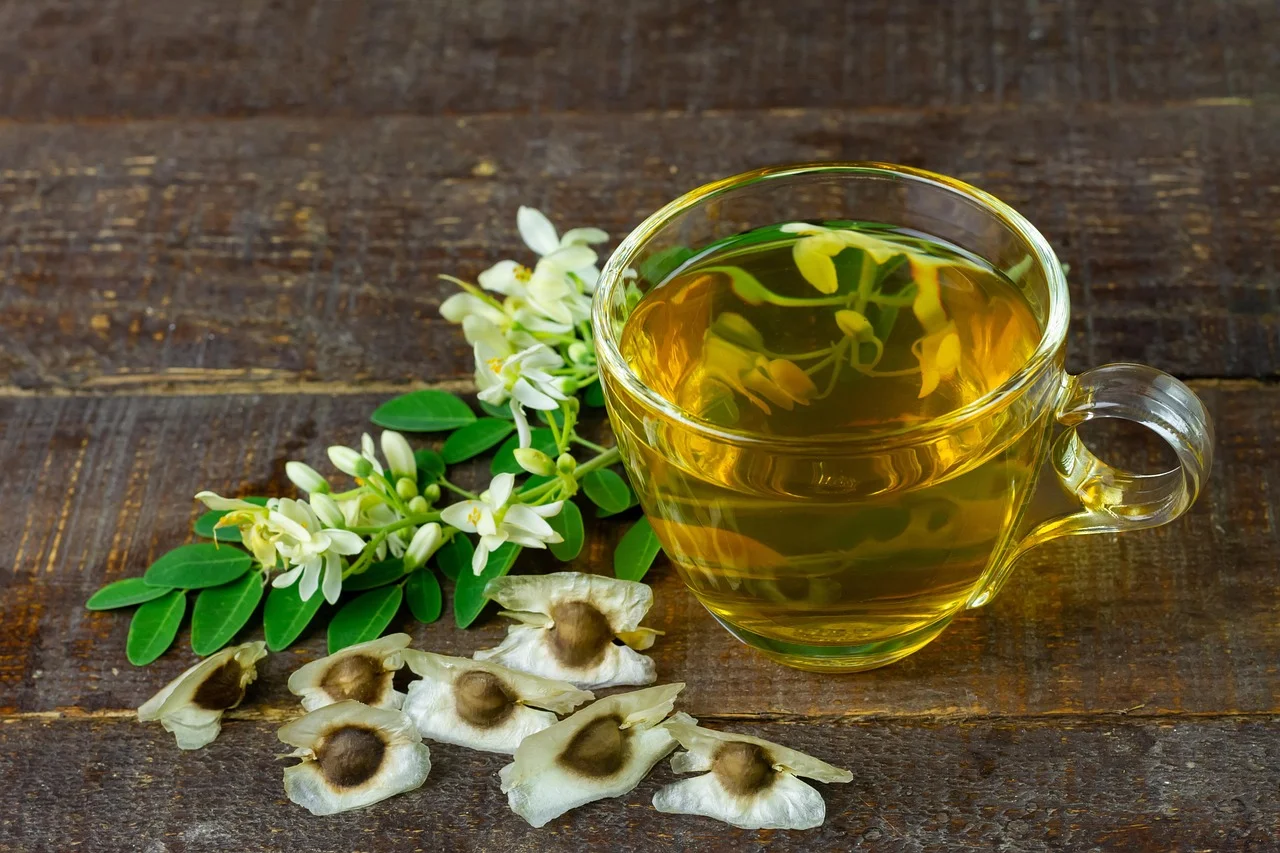
Historically, its uses were not limited to oil extraction. Moringa leaves and oil were used together in traditional skincare practices to cleanse, protect, and nourish the skin. In certain African and Middle Eastern cultures, moringa oil was specifically prized for shielding the epidermis from particularly harsh environmental conditions, while crushed leaves served as a fresh base for purifying herbal masks and treatments.
Why Does Moringa Oil Protect Better Than a Standard Moisturizer?
To understand the true value of moringa oil, one must look beyond basic hydration. Oils sourced from arid climates were not selected by ancient populations merely to soften the skin, but to actively support its repair and natural defenses.
Botanical Survival at the Service of the Epidermis
In a temperate urban environment, an oil is often judged by its emollient properties—namely, its ability to soften the stratum corneum and lock in moisture. But a fundamental fact must be highlighted: these specific botanical oils evolved in natural environments marked by blistering heat and extreme drought. Consequently, their efficacy has been proven in real-world conditions that demand extraordinary resilience.
A plant that survives months without rainfall and under intense solar radiation develops advanced cellular defense mechanisms. When oil is extracted from its seeds, we are tapping into the very essence of this botanical survival system.
A Preventive and Antioxidant Approach
Transferring this resilience from the plant to human skin completely changes the ingredient's function. Moringa oil is exceptionally rich in complex nutrients, boasting a lipid profile dominated by oleic acid alongside behenic and palmitic acids, complemented by a nuanced presence of antioxidants compared to the leaves. This biochemical density makes it a supportive oil for skin exposed to pollution, UV rays, and environmental stress, rather than just a passive hydrating emollient.
Applying moringa oil thus helps fortify the epidermal barrier. This concept explains why East African populations used it preventatively before facing scorching winds. It is worth noting, however, that while it limits oxidation, it does not contain UV filters and is by no means a substitute for protective sunscreen.
How Do the Vitamins in Moringa Benefit the Skin?
The empirical observation of moringa's benefits by African and Middle Eastern cultures is echoed in the biochemical analysis of its compounds. The extract's ability to support the skin barrier relies on a powerful synergy of vitamins and fatty acids.
The Alchemy of Leaves and Seeds
Each part of the tree (Moringa oleifera) offers a distinct nutritional profile. Fresh moringa leaves are naturally rich in vitamins A, C, and E, although vitamin C is significantly reduced during the powdering process. These three elements are renowned as essential nutrients for maintaining healthy skin:
- Vitamin A plays a role in cellular renewal.
- Vitamin C supports the skin's structure and promotes a radiant complexion.
- Vitamin E strengthens the skin barrier through its antioxidant protection.
Curbing Oxidative Stress
The most compelling aspect of moringa oil lies in its action against cellular oxidation. Environmental stress generates free radicals that degrade collagen.
To counter this, moringa boasts a remarkable concentration of antioxidants, flavonoids, and compounds with soothing and anti-inflammatory properties. These molecules work in tandem to help reduce oxidative stress, which is linked to premature skin aging. The centuries-old use of this oil thus finds its modern explanation in its ability to support the skin against external aggressors.
How to Choose Among African Botanical Oils?
With the proliferation of oils originating from the African continent and the Middle East, distinguishing their profiles is essential to target the right needs. Although Marula, Moringa, Argan, and Shea oils are often mentioned together in beauty rituals, their historical functions differ significantly.
Here is a comparative breakdown based on documented traditional practices:
| Botanical Oil | Historical Origin | Primary Ritual Function | Textural Profile and Key Benefit |
|---|---|---|---|
| Moringa (M. oleifera) | East Africa / Middle East | Support against harsh environments | Lightweight texture, delivers antioxidants to limit oxidative stress; a repairing and nourishing oil. |
| Marula (S. birrea) | Southern and East Africa | Nourishing resilience care | Lightweight and fast-absorbing, rich in fatty acids; intense hydration without a greasy residue. |
| Argan (A. spinosa) | North Africa (Berber women) | Daily skin restoration | Balanced in linoleic and oleic acids; supports skin elasticity. |
| Shea (V. paradoxa) | West and Central Africa | Deep repairing emollient | Dense butter at room temperature; locks in moisture. |
This overview makes it easy to see that moringa stands out for its lightweight texture paired with powerful antioxidant and soothing action.
How to Incorporate the Moringa Ritual from the Inside Out?
Understanding the mechanisms of moringa has transformed how this plant is consumed and applied today. The wellness industry now draws inspiration from the holistic approach of ancient East African rituals.
The Holistic Inside-Out Approach
The defining feature of contemporary routines lies in the dual nutritional and topical approach. Moringa offers a two-fold application: it is consumed as a powder to support overall internal health, and formulated as a cosmetic ingredient applied directly to the skin. Specialized brands champion this comprehensive strategy that works "from the inside out."
An Optimized Modern Routine
To get the most out of this daily care, the application method should be tailored to the oil's structure:
- Nutritional Preparation: Ingesting moringa leaves (as an infusion or powder) systemically provides precursors to vitamin A and vitamin E.
- Topical Application: On freshly cleansed and ideally slightly damp skin (after a water-based serum), apply 2 to 3 drops of cold-pressed moringa oil.
- Ritual Massage: Gently press the oil into the face, neck, and décolletage. Its high oleic acid content allows it to nourish the skin while forming an active antioxidant shield, helping preserve the epidermis from daytime urban aggressors.
FAQ: Understanding the Use of Moringa Oil
Is moringa suitable for acne-prone or irritated skin?
Moringa oil contains compounds with soothing and purifying properties that can help calm the skin and keep it clearer as part of a balanced routine. Its lightweight texture is reputed to be non-comedogenic, though this can vary depending on the formulation. Because every skin type is different, highly reactive skin should proceed with caution and perform a patch test first.Why does the global craze for moringa seem delayed compared to argan oil?
Historically, the use of moringa was deeply rooted in local East African and Middle Eastern practices in an empirical and self-sufficient manner. Unlike argan oil, whose cosmetic export supply chains to Europe were established much earlier, moringa remained a regional secret for a long time, used in its raw form before the industry managed to stabilize its extraction on a large scale.What are the precautions for using this oil?
As with any natural botanical extract, it is recommended to perform a patch test on the inner arm before applying it to your face for the first time to prevent any risk of allergic reaction. Furthermore, although moringa provides excellent antioxidant support against environmental exposure, its oil does not contain UV filters and is under no circumstances a substitute for sunscreen to protect against the sun.Conclusion: A Rediscovery of Ancestral Skincare
Moringa's transition from a closely guarded botanical remedy in East African rituals to an active ingredient in modern dermocosmetics illustrates a profound shift in our relationship with beauty. Today's industry uses analytical tools to study what African and Middle Eastern cultures empirically mapped out to cope with their harsh climates. By understanding that protection against environmental aggressors requires more than just an emollient layer, we recognize the historical significance of these oils: working actively to support cellular resilience.