Olive Oil, Secret B
For a long time, the beauty industry championed elaborate skincare routines that could involve upwards of ten consecutive daily steps. In response to this complexity, a pared-down approach to body care has recently taken center stage: "skinimalism." Yet, this practice is far from a modern invention.
Key Takeaways:
- Skinimalism draws inspiration from ancient Middle Eastern traditions.
- Olive oil is used as a versatile, all-over body treatment.
- Bedouin communities keep this heritage alive, closely tied to terrace farming.
- Scientifically speaking, olive oil is rich in antioxidants (vitamin E, polyphenols).
What Makes Olive Oil from Palestinian Terraces Different?
A Pastoral Geography in Transition
The Bedouins are the traditionally nomadic peoples of Palestine. While their way of life has evolved, the non-governmental organization Anera notes that many now lead a more sedentary existence. Nevertheless, they scrupulously preserve deep-rooted pastoral practices and lifestyles. These populations are not confined to a single geographic area. Bedouin communities are spread throughout the West Bank, with a significant population in southern Israel and a smaller number in the Gaza Strip.
Tribes and Territorial Roots
This cultural heritage is sustained by a deeply entrenched tribal structure. The NGO Anera highlights several Palestinian Bedouin tribes that keep these traditions alive:
- The Azazme and Ramadeen: rooted in the Hebron governorate.
- The Jahaleen and Ka'abneh: in the Jerusalem governorate.
- The Rashaydeh: historically established across the Bethlehem and Jericho governorates.
Agriculture as a Foundation of Identity
Traditional Palestinian society is predominantly agricultural, and working the land was generally a communal endeavor. The land is held particularly sacred, beautifully illustrated by the poet Mahmoud Darwish when he evoked the land we carry in our blood. This connection to local agriculture explains why every plant resource—starting with the olive—is treated with profound respect.
The Science Behind the Tradition: Polyphenols, Vitamins, and Terroir
The cosmetic potency of this Levantine tradition stems from a combination of ancestral agricultural engineering and targeted plant biochemistry.
Dry Stone Terraces
Olive cultivation relies on careful management of the steep landscape. The dry stone terraces of the West Bank are traditionally known as senasil. According to Anera, the cultural landscape of Battir—famous for these impressive agricultural structures built over centuries by locals to tame the rocky hillsides—was officially designated a UNESCO World Heritage site in 2014 under the title "Palestine: Land of Olives and Vines – Cultural Landscape of Southern Jerusalem, Battir." This cultivation method encourages the growth of resilient trees that produce high-quality fruit.
A Protective and Restorative Biochemical Profile
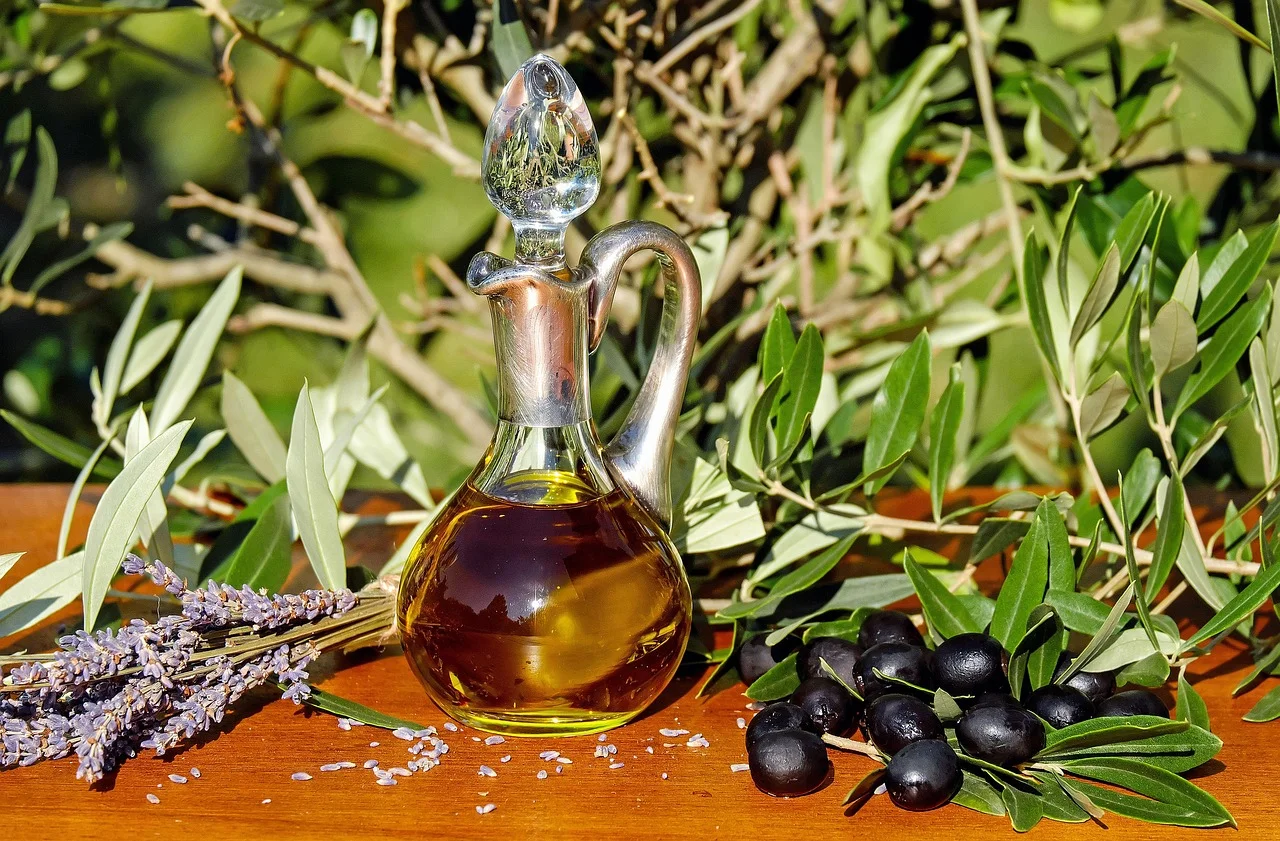
The harvest from these hills yields an extra virgin oil that doubles as a skincare treatment. Scientific literature and specialized brands describe this substance as a natural, generally well-tolerated moisturizer. However, a patch test in the crook of the elbow is recommended before widespread application: dermatological studies have shown that olive oil, due to its high oleic acid content, can disrupt the skin barrier and cause contact dermatitis, even on healthy skin. This oil is rich in antioxidants, chief among them vitamin E and polyphenols. Dermatologically speaking, these molecules are celebrated for neutralizing free radicals generated by skin cells during exposure to aggressors like urban pollution. This chemical composition is thought to help repair and regenerate skin damaged by prolonged sun exposure, smoking, or a poor diet. Extra virgin olive oil thus acts as a natural antioxidant; however, while these benefits are documented in scientific literature, they are predominantly championed by commercial sources and should be viewed with a degree of nuance.
The Overnight Hair Ritual and the Global Legacy of Natural Lipids
The Levantine Application Protocol
Hair care is a perfect illustration of this minimalist approach. An overnight olive oil hair treatment mimics the rituals practiced for generations in Jordan and Palestine. The protocol begins by applying warmed oil to the scalp. This is followed by a 5- to 10-minute manual massage to stimulate microcirculation. The hair is then wrapped in a warm towel or silk scarf, and the treatment is left to sit overnight.
A Universal Tradition of Lipid-Based Care
Across the globe, women have built beauty rituals centered around a single, pure lipid active.
- The South Asian ritual: Amaliah magazine points out that the champi—a traditional, almost sacred scalp massage originating in South Asia—utilizes warm coconut oil, sometimes infused with curry leaves or fenugreek seeds.
- The African formulation: The same publication highlights a natural preparation passed down through generations. Hibba, a mother of two quoted in the magazine, recalls her grandmother's formula, which she lovingly dubbed her hair cocktail. It was a blend of raw shea butter and aloe vera pulp. The mixture was slathered throughout the hair, and the young girls would then sit in the sun until the paste hardened before washing it out, guaranteeing smooth, soft, and shiny locks.
From Head to Toe: 5 Skinimalist Steps to Adopt
Embracing this Bedouin heritage today allows you to simplify your skincare routine through targeted applications of extra virgin olive oil. Expert recommendations highlight five key protocols.
The first step is cleansing. Olive oil is often touted as a gentle makeup remover, capable of dissolving even waterproof makeup without stripping the skin barrier, all while conditioning lashes and brows. The recommended method is to apply a few drops to a cotton pad and use gentle circular motions. However, a word of caution is in order: while it interacts well with the skin's natural sebum, olive oil carries a moderate comedogenic rating (typically scoring between 2 and 3 out of 5 on reference scales, though indices vary). It therefore requires caution for acne-prone skin. Additionally, a raw product demands strict hygienic storage and offers absolutely no UV protection.
The second step is all about deep nourishment. Blending the oil with other local staples allows you to create highly nutritious masks. A classic facial mask combines 1 tablespoon of olive oil with 1 teaspoon of natural honey—an ingredient traditionally prized in cosmetics for its purifying properties. Leave the mixture on the face for 15 to 20 minutes, then rinse with warm water (ideally once or twice a week).
The third step targets the eye contour. For this delicate area, gently pat 1 to 2 drops of olive oil into the skin at night. Its antioxidants—particularly vitamin E and polyphenols—are believed to help reduce the appearance of fine lines and puffiness.
Moving beyond the face, two additional protocols apply to the rest of the body. The fourth step is a daily massage for cuticles and nails. This ritual is highly popular throughout the Levant, especially during the winter months when the skin becomes dry and prone to cracking. Finally, the fifth step is a revitalizing body scrub made by combining olive oil with coarse sugar. Massaged in circular motions over damp skin in the shower, this blend sloughs away dead cells while stimulating blood circulation.
Bedouin Skinimalism
| Traditional Use | Application Method | Cosmetic Equivalent Replaced |
|---|---|---|
| Gentle makeup removal | A few drops on a cotton pad, applied in circular motions. | Micellar water, waterproof makeup remover, eyelash serum. |
| Face mask | 1 tbsp oil + 1 tsp honey. Leave on for 15-20 min, rinse with warm water (1-2 times/week). | Commercial hydrating mask, synthetic soothing treatment. |
| Eye contour care | 1 to 2 drops gently patted in at night, right before sleep. | Anti-wrinkle night cream, depuffing eye gel. |
| Cuticle care | Daily massage into nails and cuticles, particularly in winter. | Cuticle oil, restorative hand cream. |
| Body scrub | Blend of olive oil and coarse sugar, applied in circular motions in the shower. | Synthetic body scrub, chemical exfoliant. |
Conclusion
In the face of a growing consumer demand for transparency and traceable sourcing, returning to pure botanical extracts makes perfect sense. The rituals pioneered by Bedouin women remind us that respecting raw, local terroirs yields remarkable benefits. Well-documented active compounds (such as vitamin E and polyphenols) undeniably endow this oil with recognized antioxidant power.
Glossary
- Polyphenols: Organic molecules found in plants, renowned for their antioxidant properties.
- Senasil: Dry stone retaining walls that form the traditional agricultural terraces in Palestine.
- Champi: A traditional scalp massage originating in South Asia, considered almost sacred.