Camel Milk Soap: The Guide to Spotting Genuine Desert Care (and Avoiding Diluted Marketing)
Introduction: camel milk, gift of the desert or marketing ploy?
For centuries, the peoples of Arabia have known the value of camel milk, which they often describe as "the gift of the desert." Bedouin communities relied on this milk both for nourishment and for cosmetic uses, in environments where water and plant-based resources remained scarce. This historical foundation explains why soap bearing its name appeals today to European consumers seeking natural skincare.
But this ancient narrative says nothing about what actually sits in the bar of soap on a Belgian bathroom shelf. According to Swiss brand Granamed, a distributor of camel milk soaps, modern science would support many traditional healing claims associated with this ingredient—a brand assertion worth verifying rather than accepting at face value. The same company also presents itself as the world's largest manufacturer of natural soaps made with fresh camel milk, a self-declaration deserving the same editorial caution.
The real question, then, is not whether tradition exists—it certainly does—but how to distinguish, at the moment of purchase, between genuinely active soap and a product that merely borrows the name of camel milk as window dressing. This distinction lies on the label, in the chemistry of solid format, and in concrete evidence of skin tolerance.
Key Takeaways
Before diving into details, four key markers suffice to judge a camel milk soap without being swayed by marketing narratives:
- Check the position of camel milk in the INCI list: in cosmetics, ingredients are ranked by decreasing concentration, so camel milk relegated to the end of the list carries almost no weight in the formula.
- Favor solid format: saponification creates a stable product that theoretically requires no synthetic preservatives, unlike liquid formats.
- Know that camel milk contains no beta-lactoglobulin, but does contain a beta-casein different from cow's milk; beta-lactoglobulin and certain cow's milk caseins rank among the proteins involved in milk allergy—reassuring data, but no absolute guarantee of individual tolerance.
- Systematically test an unscented version on the inner wrist and wait 24 hours before full use, especially for reactive skin.
What Does Camel Milk Actually Contain for the Skin?
According to the commercial description from Organic Shop Egypt, a vendor based in Hurghada who has marketed camel milk soaps and skincare for over 20 years, this milk would contain AHAs in the form of lactic acid at high concentration, vitamins A, B1, B2, B12, C and E, lactoferrin, immunoglobulins, minerals, and omega 3 and 6 fatty acids. It's a dense list, but each claimed component corresponds to a specific mechanism of action best examined individually rather than lumped together.
Claimed Mechanisms
The brand Granamed attributes to lanolin the ability to retain hydration and soothe skin inflammation. Lactic acid, meanwhile, is presented as a classic AHA eliminating dead cells and impurities from the skin's surface—a claim repeated by Organic Shop Egypt, but one worth qualifying: in a saponified soap at alkaline pH, lactic acid is largely neutralized into lactate, which practically limits the exfoliating effect attributed to a free AHA.
This same vendor attributes to lactoferrin an inhibitory effect on the growth of Cutibacterium acnes (formerly classified as Propionibacterium acnes), the bacterium associated with blemishes. Finally, immunoglobulins present in the milk would calm the overreactive immune responses of sensitive skin—an argument the brand links to formulas free of SLS/SLES and added fragrance.
These mechanisms remain assertions from commercial sources, not results from cited clinical studies complete with methodology. They guide reading the label, but do not excuse one from verifying what the bar of soap actually contains.
Why Solid Format Changes the Chemical Equation
The preference for solid over liquid soap is not merely an aesthetic or artisanal nostalgia matter: it stems from concrete chemical constraints. A liquid soap typically has a shelf life of 12 to 24 months according to data reported by Organic Shop Egypt; in practice, this often leads to the addition of preservatives to limit microbial growth in a moist bottle, even if true liquid soap at alkaline pH can, depending on its complete formula, partially do without them.
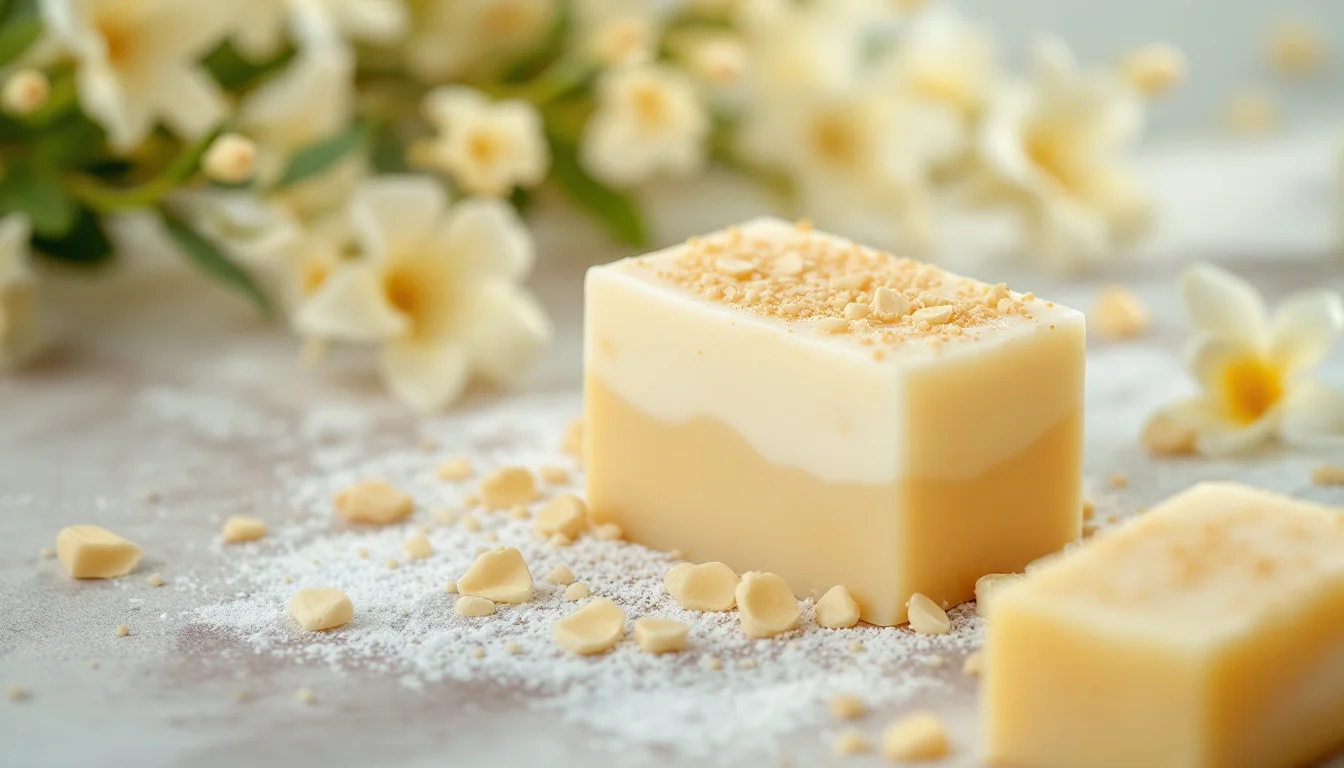
Solid soap follows different logic. The saponification process produces a stable object that theoretically requires no synthetic preservatives, according to the same source. The reason lies in the texture itself: the surface of a well-drained bar dries quickly between uses, depriving microorganisms of the moisture they need to proliferate.
In other words, genuinely "clean" camel milk soap without synthetic preservatives can scarcely exist in liquid form without compromising its natural claims. If a brand touts completely preservative-free liquid camel milk, the attentive reader should question whether this promise aligns logically with the product's shelf life in a moist bottle.
Reading the Label: Pre-Purchase Checklist
Before buying camel milk soap, four simple checks allow you to distinguish an active product from one bearing the name in label only.
- Position in the INCI: cosmetic ingredients are listed by decreasing concentration. If camel milk appears near the end, far behind water and surfactants, its actual presence in the formula remains marginal.
- Absence of listed synthetic preservatives: truly saponified soap theoretically needs none. A list heavy with synthetic preservatives often signals a different base than advertised.
- Consistency with other claimed actives: for example, a 110 g soap described by Organic Shop Egypt combines glycerin base, camel milk, coconut, almond, olive, castor oil and vitamin E, with no synthetic preservatives or artificial fragrance—a coherent profile where each ingredient has an identifiable function, to compare with the product under consideration.
- Skin patch test before full use, detailed below.
This vigilance is all the more necessary because sales pitches love to lean on flattering narratives. Both merchants consulted, for example, repeat that Cleopatra bathed daily in camel milk—a widely repeated marketing anecdote, but hardly verified historical proof. It perfectly illustrates the type of appealing story one must learn to separate from a product's actual composition.
Sensitive Skin, Acne, Milk Allergy: Who Can Use It Safely?
Camel milk presents a biochemical particularity often highlighted by vendors: it contains no beta-lactoglobulin, and its beta-casein differs from that of cow's milk, whereas beta-lactoglobulin and certain cow's milk caseins rank among proteins involved in milk allergy. For some people with cow's milk allergies, this difference reduces the probability of cross-reaction.
Yet this hardly transforms camel milk soap into a risk-free product for everyone. Allergy remains an individual reaction, and this difference in protein profile doesn't exclude other sensitivities, notably to associated plant oils (coconut, almond, olive, castor) or any added fragrances.
The simplest precaution remains a skin patch test: apply an unscented version to the inner wrist and wait 24 hours before any use on the face or full body. In case of documented severe milk allergy, consult medical advice before introducing this type of product, even topically.
Buying from Belgium: What Distance Changes
For readers living in Belgium or elsewhere in Western Europe, camel milk is not an ingredient you necessarily must import yourself from the Middle East. Distribution channels already exist on the continent: The Camel Soap Factory products are, for example, distributed in Switzerland by Granamed, showing that this type of soap already circulates through established European channels, without the buyer needing to order directly from the Gulf.
This changes nothing about the verification method itself, detailed above. The geographic origin of the distribution channel never exempts one from this check.
Frequently Asked Questions
Does camel milk soap suit someone allergic to dairy products of bovine origin? The absence of beta-lactoglobulin and presence of a beta-casein different from cow's milk make cross-reaction less likely, but guarantee no absolute tolerance. A patch test remains the only reliable way to verify your own reaction, especially for skin already prone to eczema.
How do you quickly spot soap that contains almost no camel milk despite its name? Beyond INCI position, a complementary signal is abnormally low price compared to products whose detailed composition is publicly displayed: genuinely integrated camel milk represents a procurement cost that highly diluted formulas don't have to bear.
Why aren't there 100% natural liquid versions of this soap? According to data reported by specialized vendors, the microbiological stability of liquid in a bottle preserved over months would depend on preservatives, whereas a saponified solid bar remains stable thanks to drying between uses. If a brand nonetheless announces completely preservative-free liquid camel milk, best to check the complete INCI list before believing it: this promise remains difficult to reconcile with prolonged storage in a moist bottle.
Conclusion
As the camel milk market internationalizes and more brands claim its use, the question increasingly mattering to buyers will no longer be "is it traditional?" but "where exactly does this milk come from, and at what concentration does it appear in the formula?" This fine traceability remains, for now, poorly documented publicly beyond manufacturers' own declarations. It could become, in coming years, the next frontier of expectation for consumers attentive to the actual composition of their skincare products.