Ghassoul: Decoding the Ancestral Facial Ritual

The Western wellness industry has largely transformed the clay mask into a standard spa treatment, often disconnecting it from its roots. Yet, far from the protocols of globalized spas, applying ghassoul mixed with rose water is deeply anchored in Moroccan tradition. This practice is far more than a quick consumer beauty fix; it is the central link in a chain of knowledge passed down by women. Behind this raw mineral powder lies a specific geography and a precise application method. To truly understand this ritual, we must place this facial treatment back into its original context. Every step, from selecting the ingredients to the resting time, serves both a physical and social purpose.
Key Takeaways
- A catalyst for social bonding: Historically, this clay treatment has been a moment of intergenerational and communal sharing among Moroccan women, going far beyond mere aesthetics.
- A specific geographical origin: According to the Morocco Escape guide, ghassoul deposits are primarily located in the geological basin of the Moulouya River, in the Middle Atlas mountains.
- Precise timing: For the face, the recommended resting time is a strict maximum of 5 to 7 minutes to prevent skin discomfort—a notably shorter duration than for body applications.
- A sequential mechanism: The ritual's effectiveness relies on a consistent order of application within the hammam (steam, cleansing, exfoliation, mask, hydration). Each step physically prepares the skin for the next.
Beyond Cosmetics: A Social and Intergenerational Ritual
The application of this clay was never intended to be a solitary act, rushed through in a utilitarian bathroom. It is at the heart of an experiential learning dynamic.
Passed down by female elders
Historically, Moroccan beauty rituals are passed down from generation to generation. As highlighted by Oasis Lodges, grandmothers cared for their skin using simple techniques and natural resources, long before the rise and standardization of modern cosmetics. This transfer of knowledge did not rely on printed instruction manuals or tutorials, but rather on direct observation and shared practice within the home.Skincare as a space for socializing
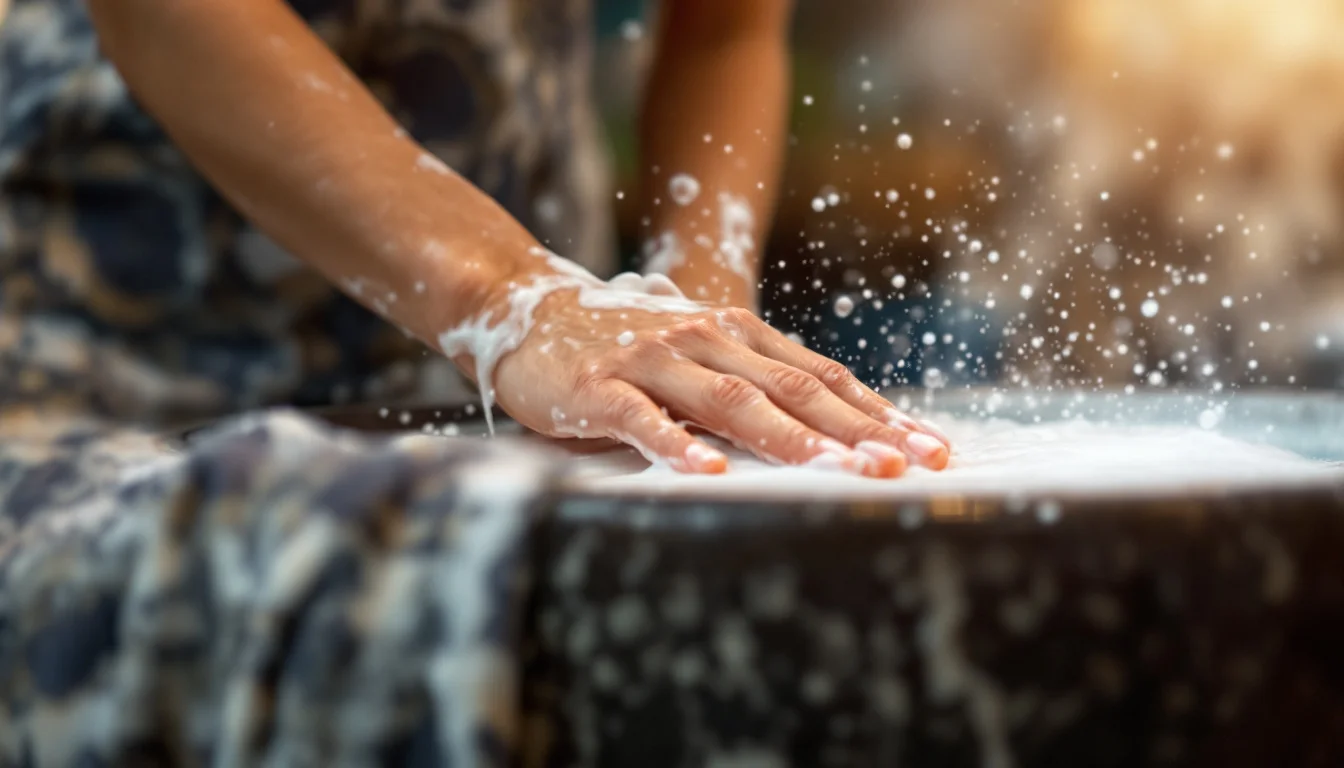
In Moroccan villages, preparing and applying ghassoul is a symbol of sharing. Women would gather to prepare this mask, exchanging advice, telling stories, and passing on their beauty secrets. This collective dimension elevates a purely material act into a cherished social and familial moment. The ritual thus becomes a space for female expression and solidarity. It represents not just a hygiene routine, but a time to reconnect with oneself, listen to one's body, and respect nature—a holistic approach far removed from the purely utilitarian view of contemporary cosmetics.Geography and Mineralogy: What Sets Middle Atlas Clay Apart?
The very name of the product hints at its primary function. The term "rhassoul" (also spelled ghassoul) stems directly from the Arabic verb ghassala, which literally means "to wash."
Rooted in the Middle Atlas
Unlike other clays mined from industrial quarries worldwide, this earth comes from a highly localized deposit. The premier sources of this clay are found primarily in Morocco's Middle Atlas mountains. More specifically, extraction takes place within the geological basin of the Moulouya River.A mineral composition championed by the industry
Producers and retailers highlight its unique mineralogical makeup. Manufacturers boast a powder that is particularly rich in silica, magnesium, potassium, and calcium. They attribute a high ion-exchange capacity to this geological structure, maintaining that its soft texture effectively draws out impurities. However, its absorbent nature inevitably captures surface lipids; this is exactly why strict timing is recommended for facial applications to prevent drying out the skin.A Comparison of Cosmetic Clays
To understand ghassoul's unique position, it is helpful to compare it to other mineral powders commonly used in the beauty industry.| Clay | Typical Geographical Origin | Main Purported Benefit | Drying Risk (indicative, based on commercial clay literature) |
|---|---|---|---|
| Ghassoul | Middle Atlas (Morocco) | Cleansing via absorption | Moderate (if timing is respected) |
| Bentonite | Volcanic deposits (Global) | Strong absorption of oils | High |
| Kaolin | Weathered granitic soils (Global) | Soothing and mattifying | Low |
| Fuller's Earth | Sedimentary deposits (Global) | Bleaching and degreasing | Very high |
The Ghassoul and Rose Water Facial Ritual: The Authentic Recipe
Preparing the mixture requires precise measurement and consistency. The process is documented as a comprehensive ritual structured in three distinct phases: the careful application of the clay, a light skin massage, and a meticulous rinse. Close attention is paid to the texture of the paste and the water temperature, both of which are essential for a successful treatment.
Dosage and preparation
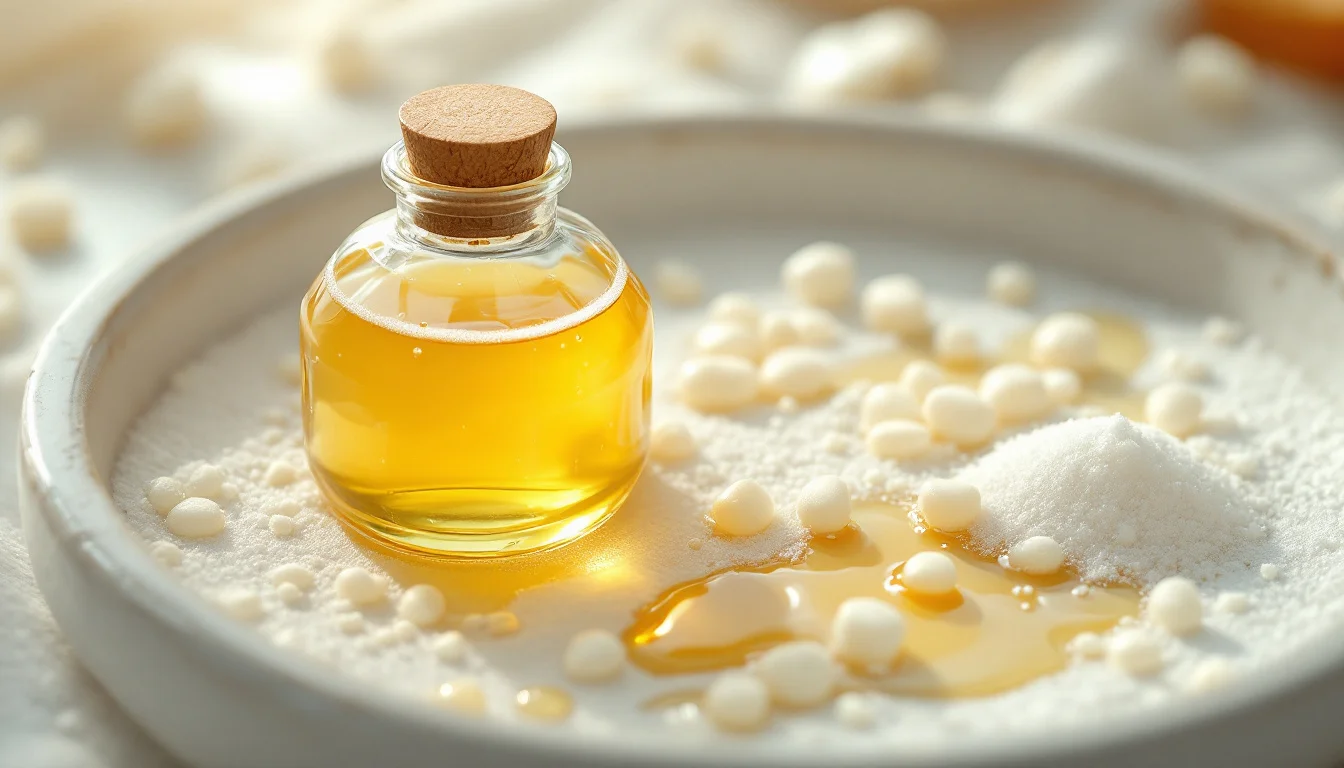
The facial recipe requires a very measured amount: a single tablespoon of rhassoul is plenty. This powder should be hydrated with rose water—or plain water if necessary—until a smooth, fluid paste forms. During application, it is imperative to avoid the eye contour area. This precaution is due to the extreme thinness and fragility of the periorbital skin when exposed to the weight and tension of a drying mask.Strict timing
The resting time is the most critical parameter of the treatment to prevent irritation. For the face, this duration must absolutely not exceed 5 to 7 minutes. Facial application is notably more drying than when applied to the body. Therefore, the clay should never be allowed to crack or pull tight on the skin. The process concludes with a thorough rinse using lukewarm water, ensuring the complete removal of any earthy residue without the need to aggressively rub the face.Treatment Sequencing: Why is the Order of Steps Crucial?
The mask's effectiveness relies not only on its composition but on its exact placement within the Moroccan cleansing routine. Each step follows a physical logic where the preceding action dictates the success of the next.
The sequence of mechanical actions
The ritual unfolds in the following order:
- Steam: Initial exposure to the damp heat of the hammam serves to open the pores and soften the superficial layer of the skin.
- Black soap: This soap acts as a surfactant, emulsifying surface oils and loosening accumulated impurities.
- Kessa glove: Scrubbing with this textured fabric creates friction that mechanically removes dead skin cells and the emulsion residue left behind by the black soap.
- Rhassoul mask: The clay is applied to skin that is now bare and perfectly clean. It can then deeply cleanse the pores and deliver its minerals unhindered by a sebum barrier.
- Argan oil: Applied at the very end of the routine on still-damp skin, this lipid phase seals the epidermis to lock in moisture.
Where to Buy Authentic Ghassoul?
For consumers looking to recreate this treatment at home, sourcing is a pressing question. Purchasing requires paying close attention to local distribution channels.
Cooperatives
Much like argan oil, the rhassoul supply chain relies heavily on women's cooperatives. Their primary goal is to provide a direct income for women in rural areas.Price benchmarks
To evaluate the fairness of market offers and spot excessive markups from middlemen, it is helpful to look at local prices. As a rough guide, powdered rhassoul retails for about 4 to 8 euros for a 500-gram bag in its native market.Frequently Asked Questions (FAQ): Using Ghassoul Daily
Can ghassoul be used on hair?
Yes. In fact, this mineral treatment is frequently used to purify the scalp. For this, it requires a much more liquid consistency, applied meticulously from roots to ends, often wrapped under a warm towel. The resting time ranges from 10 to 15 minutes and must absolutely be followed by an extremely thorough rinse.Can men incorporate this ritual?
Absolutely. While the social aspect and historical lineage of this specific mask are deeply rooted in a female dynamic within villages, the mechanical absorption properties of the clay are perfectly suited to the physiology of male skin as well.Can I bring these traditional preparations in a flight carry-on?
The dried earth in powder form can travel in carry-on luggage without any restrictions. However, preparations already mixed with rose water to form a paste are subject to the standard liquid limits of 100 ml maximum in the cabin.Conclusion: Preserving the Practice Beyond the Jar of Clay
The contemporary challenge facing these rituals lies in the constant tension between preserving intangible heritage and meeting the demands of a globalized cosmetic industry. While international spas tend to isolate the raw material from its geographical roots to create an interchangeable standard, sustaining short, local supply chains remains crucial to the stability of producing regions. Championing rural cooperative work ensures that this cultural legacy continues to provide a direct income for local female producers, preventing it from becoming just another mass-packaged commodity.