Bakhoor and Resins
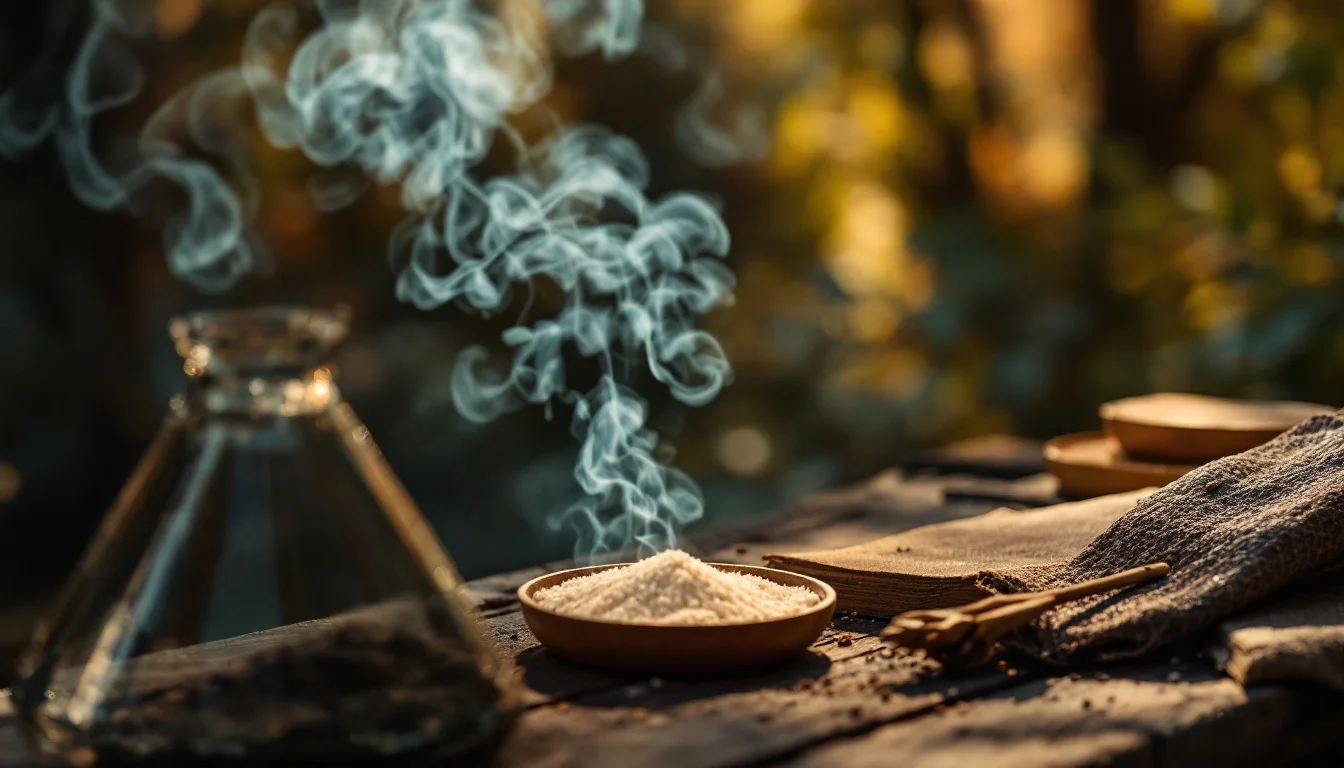
Long relegated to the status of exotic folklore or a mere home fragrance diffuser, the practice of burning aromatics is undergoing a transformation today. Far from outdated clichés, burning resins and precious woods can serve as a tool for sensory relaxation in contemporary interiors. Strictly speaking, the term "incense" encompasses all these materials that release fragrant substances along with smoke. Whether herbs, wood chips, plant pieces, or resins, these raw materials—often rich in essential oils—are sold as pure substances or blends. This renewed interest is part of a quest for sensory authenticity: instead of vaporizing synthetic molecules with a simple mechanical gesture, enthusiasts are turning to the slow, deliberate process of ritual burning.
Burning aromatics at home, however, requires careful learning. From handling hot charcoal and controlling heat with a sieve to selecting resins, the art of releasing the scents of fragrant wood leaves no room for improvisation. Delving into these ancestral practices can transform your living space into a sanctuary of relaxation.
Key takeaways:
- It is thought that aromatic smoke can influence mood through the olfactory system, although the extent of these effects varies from person to person.
- The choice of method (charcoal, sieve, incense sticks) depends heavily on the raw material being used.
- The practice requires strict physical precautions to prevent fire hazards.
- It is essential to ventilate rooms regularly to maintain indoor air quality.
How does the Arabic tradition of bakhoor inspire modern wellness?
Deep ritual roots
For millennia, the burning of aromatic plants has accompanied human evolution. It is widely believed that the discovery of this practice went hand in hand with the "discovery" of fire: sitting around the hearth, early humans would have gradually noticed that different types of wood released specific scents as they burned. Historically, ascending smoke was perceived as a direct link between mortals and deities, while also occasionally being used to treat ailments. Even today, burning incense is practiced across various cultures to connect with ancestors, aid in meditation, or as part of rituals to purify both the home and the mind. Certain days and life events are considered particularly suited for this practice, such as solstices, full moons, births, marriages, and deaths. This symbolic dimension has gradually been coupled with a more pragmatic approach: it was assumed that burning incense did more than just change a room's scent—it might also influence mood, though scientific evidence for this effect remains partial and methodologically debated.
The emergence of specialized offerings
Among these traditions, the Oriental ritual holds a prominent place, notably through bakhoor. This traditional blend is presented by the specialized retailer PerfumeOriental.com as a category of incense stemming from the Arab world's heritage, featuring in its own dedicated collection. This material requires precise equipment to fully reveal the complexity of its aromatic plumes.
Consequently, the practice is becoming institutionalized in contemporary interior design. At home fragrance retailer Nuhr Home, incense burners specifically designed for bakhoor (notably offered in an Oud version) form a standalone product category. This market structuring extends beyond the Oriental sphere: the brand Aromandise, a wellness player inspired by nature and traditions since 1993, now offers entire sets dedicated to fumigation rituals alongside aromatic wood powders. Similarly, a Belgian retailer like Farmatuur dedicates a collection explicitly titled "Fragrances & Ritual" to these products. This equipment specialization demonstrates the vitality of a practice where the quality of the tools is just as important as the material being burned.
How does the olfactory system affect mood?
What was long attributed to divine connection or spiritual elevation can be partly explained by the anatomy of our nervous system. The soothing sensation brought on by fragrant smoke is nothing supernatural; it obeys a precise bodily mechanism.
The neurobiology of smell
The impact of aromatic smoke is explained through the olfactory pathway: burning plants releases odorant molecules that enter the body via inhaled air. These molecules are detected by sensory cells, which then send messages to the brain. These signals, transmitted to the corresponding areas of the nervous system, could influence hormonal balance, although clinical evidence of such a direct effect in humans remains very limited and lacks consensus. It is this journey—from the olfactory bulb to the regulatory centers—that chemically translates aromas into physical sensations.
Setting the stage for relaxation
For this process to work effectively, the setting matters just as much as the materials. The practice demands a calm environment; when paired with inhaling the fragrant smoke, it can lead to deep relaxation. The deliberate pause required to prepare the equipment contributes to this soothing effect even before the first molecules reach the brain. Drawing on this powerful ability to influence mood, some cultures also incorporate burning aromatics into their romantic lives, relying on aromas to set a romantic mood and enhance a sensual atmosphere.
What are the three burning techniques you need to master?
Successful incense burning relies on choosing the right method for your raw material. Heat must be carefully controlled to release the aromas without scorching the essential oils found in the plants and resins.
The requirements of each approach
The charcoal method requires specific preparation (special charcoal, a fireproof container, sand, or pebbles). Specially designed charcoal or pre-made tablets are used. The intense heat of the embers allows the resins to fully develop their aromas.
For more delicate materials, direct heat should be avoided. The sieve-style incense burner method requires a specific burner and a fine mesh sieve. It offers a gentler alternative: the sieve holding the materials is placed on the burner, allowing them to smolder very softly. The distance between the sieve and the flame helps regulate smoke output; this method is perfectly suited for herbs and blends that shouldn't burn outright but rather slowly smolder.
Finally, using incense sticks and cones remains the most accessible method. The process is simple: light the tip, blow out the flame, and let the stick slowly smolder, evenly diffusing its scent throughout the room until it has completely burned down.
How to balance burning incense, safety, and indoor air quality?
While burning aromatics offers a sensory and relaxing experience, it involves combusting organic matter, which inevitably degrades indoor air quality. A pragmatic approach requires us not to ignore these household risks.
The "less is more" rule
The buildup of fragrant plumes in a confined space is counterproductive. The online store Ecco-verde.be issues a strict precautionary recommendation: you shouldn't expose yourself too often or for too long to scented smoke ("less is more") and should ventilate regularly so that incense does not become a health hazard. Taking an even more drastic stance, it is ideally advised to use incense sticks outdoors and to ensure air circulation by opening windows and doors to let the smoke dissipate when used indoors.
Household safety guidelines
Fire risks and direct toxicity require strict boundaries. The safety guidelines are clear:
- Always use a fireproof container.
- Never leave burning incense unattended.
- Do not burn incense near flammable objects.
- Avoid use around children, pregnant women, or pets.
- Adhere to the appropriate equipment precautions based on the technique used.
Frequently asked questions: how to burn aromatics at home?
Does the method used affect the amount of smoke produced?
Yes, the chosen heat and technique significantly alter smoke output. The charcoal method produces intense combustion where control over the smoke is somewhat limited, although the amount of smoke can be somewhat managed by adjusting the amount of resin used and the size of the charcoal. Conversely, using an incense burner with a sieve (which allows you to adjust the distance from the heat source) or incense sticks provides a much slower burn, better reducing and controlling the smoke released into the room.Why are pregnant women often advised against this practice?
This exclusion is based on the precautionary principle. When burned, resins and plants release active volatile compounds. Because inhalation introduces these molecules into the body, this restriction is a prudent measure to avoid any unmonitored interference with fetal development during pregnancy. Generally speaking, smoke-filled, confined environments are strongly discouraged.Conclusion
The resurgence of resins and bakhoor illustrates a renewed appeal for more traditional home fragrancing methods. By embracing the constraints of a demanding combustion process, enthusiasts are reintroducing the concepts of time and preparation into their pursuit of relaxation. This evolution favors the intensity of a raw, occasional experience over continuous diffusion, thereby marking a different approach to the domestic olfactory landscape.