The Pre-Wedding Henna Ceremony
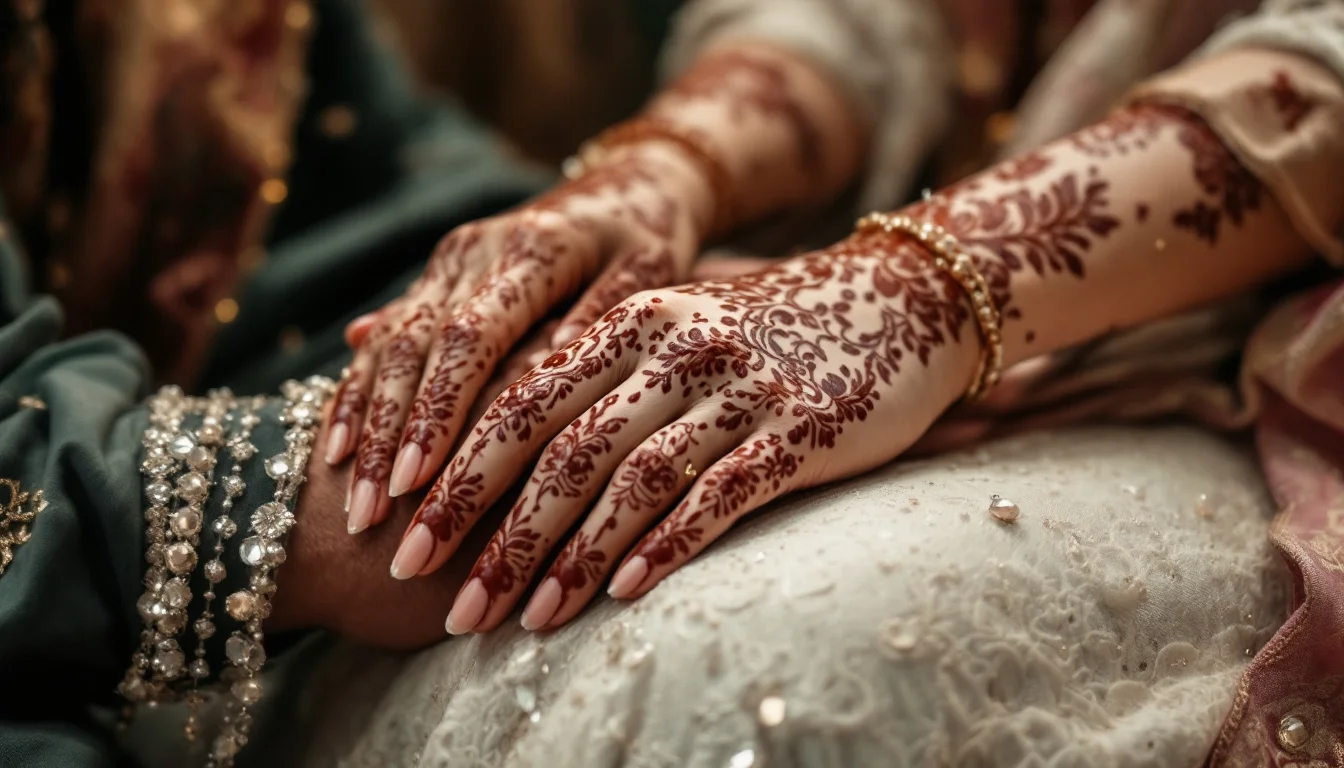
At the crossroads of North African, Middle Eastern, and South Asian traditions, preparing a bride-to-be goes far beyond simple physical aesthetics. At the heart of these festivities lies an ancestral practice marking the intimate and public transition between two stages of life. According to the wedding planning platform ayedu.ai, a mehndi ceremony is a pre-wedding celebration entirely centered around the meticulous application of henna, traditionally performed on the bride's hands and feet.
Key Takeaways:
- Rite of passage: Henna marks the major milestones in a woman's life (puberty, marriage, pregnancy) and symbolizes the upcoming union.
- Diverse designs: Visual codes vary greatly from one region to another, ranging from large floral vines to strictly symmetrical patterns.
- Chemical caution: Unlike natural henna, which yields an orange-red hue, "black" henna often contains synthetic additives that require careful vigilance.
What Do the Bride's Hands Reveal?
A Physical Rite of Passage
Using natural pigments to adorn the female body marks the major stages of existence. As analyzed by the specialized publication amaliah.com, henna is historically described as a powerful marker of the significant moments in a woman's life. This pictorial ritual occurs at specific biographical crossroads: puberty, marriage, and pregnancy. In this context, director Basma Khalifa emphasizes that this practice constitutes a true rite of passage, "a sort of symbol of marriage and union" that inscribes the change in marital status directly onto the young woman's body.
The Sudanese Symbolism of Both Hands
The visual codes tied to henna application vary profoundly across different geographies. Sudanese culture offers a striking illustration of this codified language. In Sudan, unmarried young girls traditionally adorn only one of their hands.
It is only upon her marriage that a visual shift occurs:
- The woman earns the right to decorate both of her hands.
- This new symmetry publicly announces her newfound status as a wife.
- Bilateral ornamentation is thus associated with marriage in this tradition.
Omens Tied to Color Intensity
Beyond strictly mapping social status, the aesthetic result of the design fuels numerous family superstitions. The skin-staining process is surrounded by expectations that transform the plant's chemistry into an emotional oracle. According to a popular tradition shared among many families, the intensity of the stain left on the skin holds prophetic meaning.
The darker the final shade of henna on the bride's skin, the better the omen for the strength and happiness of the upcoming marriage. This color oxidation phenomenon frequently sparks moments of bonding, with families and mothers-in-law often teasing the bride about it during the celebrations.
What Happens During the Henna Application?
The Processing Time as a Grounding Experience
The technical aspect of applying the pigment imposes a major physical constraint that tradition has managed to transform into a powerful psychological support mechanism. Most mehndi ceremonies last from three to five hours, factoring in the application for the bride, the guests, and the party itself. The wet henna, applied in thick layers to form the patterns, can take up to two hours to dry completely on the bride. For the rest of the attendees, simple designs take about 10 to 20 minutes per hand, which requires large guest lists to book multiple artists to avoid an all-day wait.
This logistical requirement is not experienced as an inconvenience: it forces the bride-to-be to abruptly slow down the frantic pace of wedding preparations. During this long period, the bride is completely unable to use her hands. This immobilization creates a space of forced yet benevolent sisterhood: her friends and bridesmaids literally take over her daily movements, feeding and pampering her while she waits.
The Technical Steps of Setting the Henna
To ensure that the dark-color omens come true, the artisans apply a rigorous methodology broken down into several care phases:
- Applying the paste: The artisan pipes the intricate designs onto clean skin using a cone.
- Initial air-drying: The bride remains motionless while the plant-based crust forms.
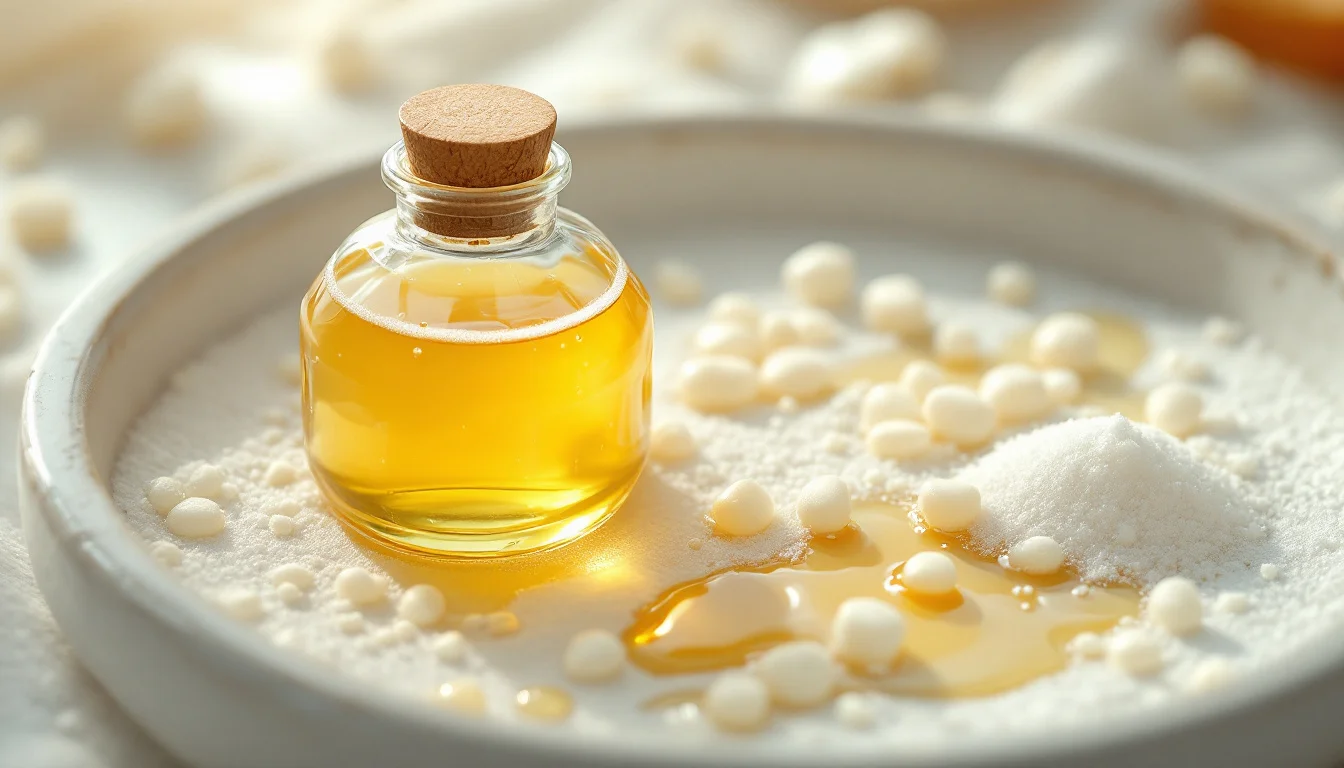
- Applying the sugar seal: Once the paste dries, a sticky mixture (often sugar-based) is dabbed onto the design and left to dry a second time. This helps the paste adhere firmly to the skin and allows the stain to set deeply.
Removal by Scraping
The final phase of this ritualistic process requires just as much gentleness as the application itself. It is strongly advised against using water to remove the encrusted plant matter. The dried paste is delicately scraped off rather than washed away. This meticulous action, often performed with the help of loved ones, finally reveals the orange-red stain beneath, marking the culmination of the beauty ritual and the official start of the festivities.
Does the Groom Participate in the Henna Ceremony?
The Playful Tradition of the Indian Subcontinent
Although the ceremony is a predominantly female space, the figure of the future husband is symbolically summoned into the very heart of the design. In South Asian traditions, the art of mehndi incorporates a romantic and playful dimension designed to break the ice between the future spouses.
The artisans carry out a meticulous game of hide-and-seek:
- Brides often hide the groom's name or initials within the dense webbing of the wedding mehndi.
- In return, the artist sometimes adds a small design to the groom's palm, incorporating the bride's name or initials into the pattern.
- The couple then compares their hands to find the hidden details, transforming body art into an intimate game of observation.
Public Affirmation in Sudan
While the Indian subcontinent favors a discreet nod on the man's hand, other cultures demand a much more visible and formal masculine participation. The idea that this body art is exclusively a woman's domain is thus contradicted by the customs of the Nile Valley.
In Sudanese culture, henna transcends the strictly female sphere and can mark a turning point in life for both men and women. During wedding preparations, men openly wear henna. This bold aesthetic gesture serves to publicly announce their marriage to the community and, above all, to visually match their bride. The man thus sports the same symbolic colors as his bride-to-be, demonstrating a shared commitment before society.
How Can You Recognize Different Regional Henna Styles?
Multicultural wedding gatherings offer the chance to observe a wide variety of visual signatures. It is possible to identify the geographical origin of a bridal tattoo simply by observing the structure of its lines, its coverage, and its dominant motifs.
| Regional Style | Geographical Origin | Design Characteristics and Coverage |
|---|---|---|
| Khaleeji | Arabian Gulf | Large, flowing floral designs accompanied by thick vines that wrap elegantly around the arm. |
| Fessi | Morocco (Fez) | Extremely fine lines, dominated by a geometric aesthetic and rigorous symmetry. |
| Pakistani | South Asia | Highly delicate and dense work, whose precision is often comparable to the embroidery of traditional Pakistani clothing. |
| Sudanese | Sudan | Features large flowers and imposing leaves. Specifically covers the fingertips, nails, and the soles of the feet. Tradition dictates applying natural ointments to darken the stain, as the darker the henna, the more beautiful it is considered to be. |
Frequently Asked Questions: What to Know Before an Application
How Long Does the Stain Last on the Skin?
Unlike a permanent tattoo, henna does not penetrate the deep dermis. The fresh paste typically stains the keratinized layers of the epidermis (such as the stratum corneum) for a period ranging from one to three weeks. The color eventually fades gradually and naturally through epidermal cell renewal, with exfoliation accelerating its disappearance.
Why Does the Color Look Light on the Day of Removal?
It is common to worry when seeing a bright orange design right after removing the crust, but this phenomenon is chemically normal. The henna stain often continues to intensify over the first 24 to 48 hours following application. An initially light color therefore does not necessarily predict a light final result; the pigment needs to come into contact with oxygen to darken and achieve its final mahogany or burgundy hue.
What is the Difference Between Red Mehndi and Black Henna?
This is a fundamental distinction for skin safety. Traditional mehndi produces a red to orange stain: it is pure henna derived from the Lawsonia inermis plant, whose final shade depends heavily on the skin's pH, the paste's composition (the addition of essential oils like eucalyptus or cajeput), and the processing time. In contrast, so-called "black" henna, frequently used in certain regions of North and East Africa to achieve highly contrasted designs, is a distinct preparation incorporating chemical agents, such as paraphenylenediamine (PPD) or its analogs. Any PPD-based preparation applied directly to the skin in the form of temporary black henna poses a risk of sensitization and severe allergic reactions, and should be avoided. These chemical compounds stray from the natural and botanical practice of the ritual and require a degree of caution.